
St. John’s Wort – the Starry Protector
St. John’s Wort ~ Hypericum perforatum, sometimes called Goatweed or Klamath Weed, is a cheerful, sun-loving herb that blooms right around the summer solstice, as if she knows exactly when we need her most. She pops up along roadsides, in dry meadows, old pastures, and disturbed ground, thriving in poor, well-drained soils where fussier plants give up. Around here she’s considered a weed by some, but she’s powerful.
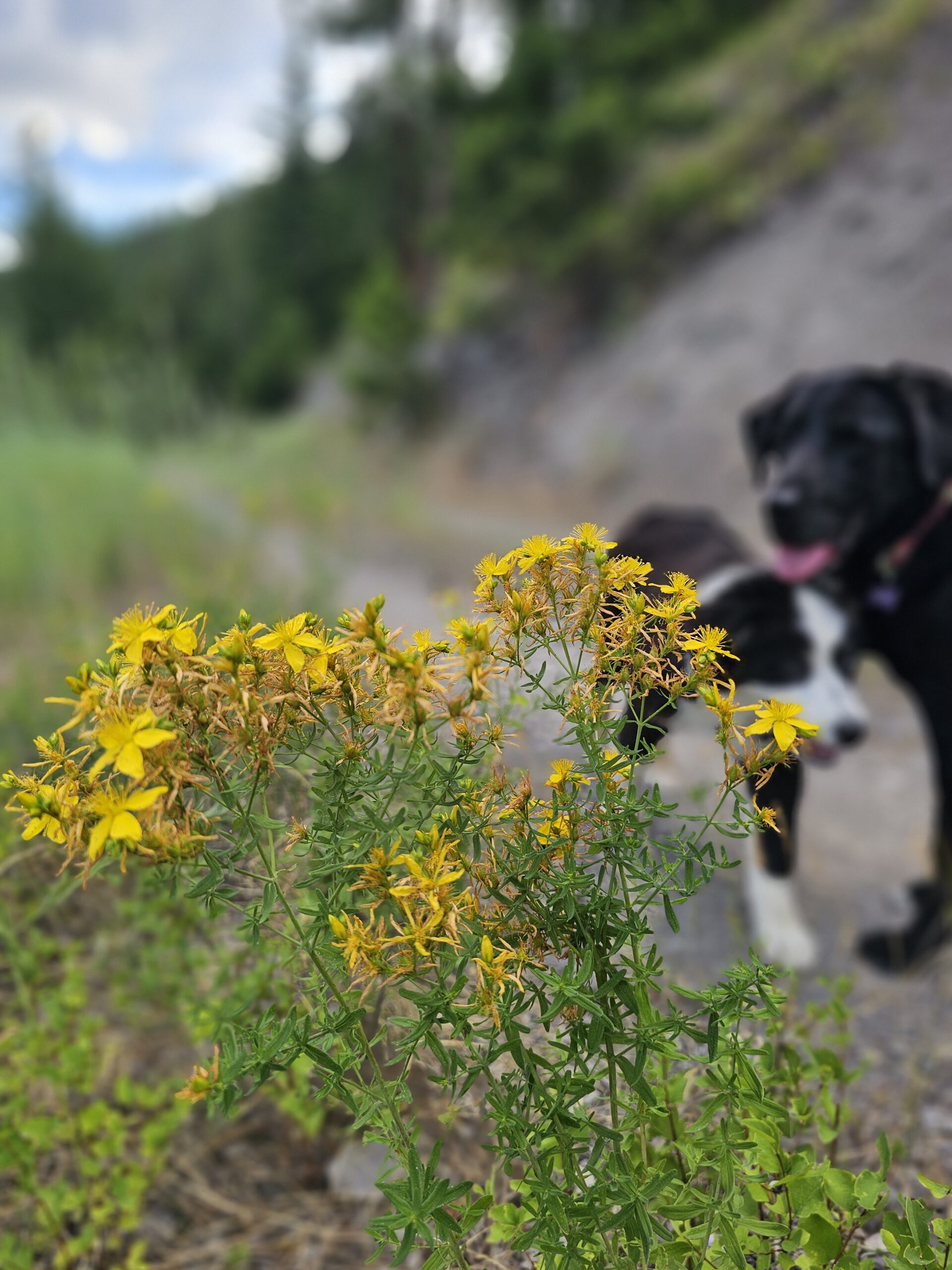
Identifying St. John’s Wort
The flowers are the giveaway: bright, five-petaled yellow stars with a little burst of stamens in the center, blooming in loose clusters at the tops of the stems. You’ll notice there are 10 or more stamens on the flower. If you pinch a fresh flower bud between your fingers, it will stain them a deep reddish-purple, that’s hypericin, one of her signature constituents, and one of the most satisfying plant ID tricks there is.
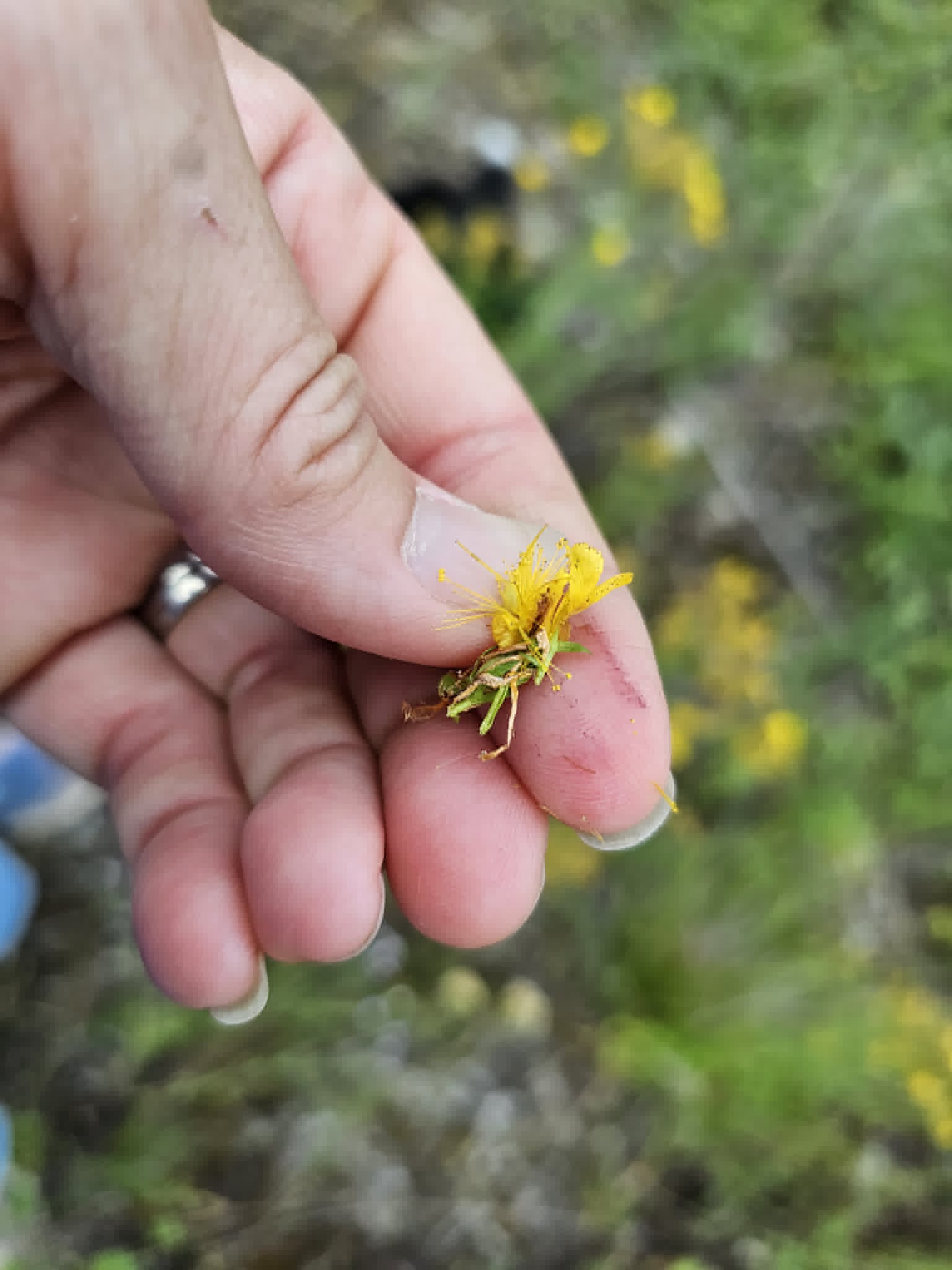
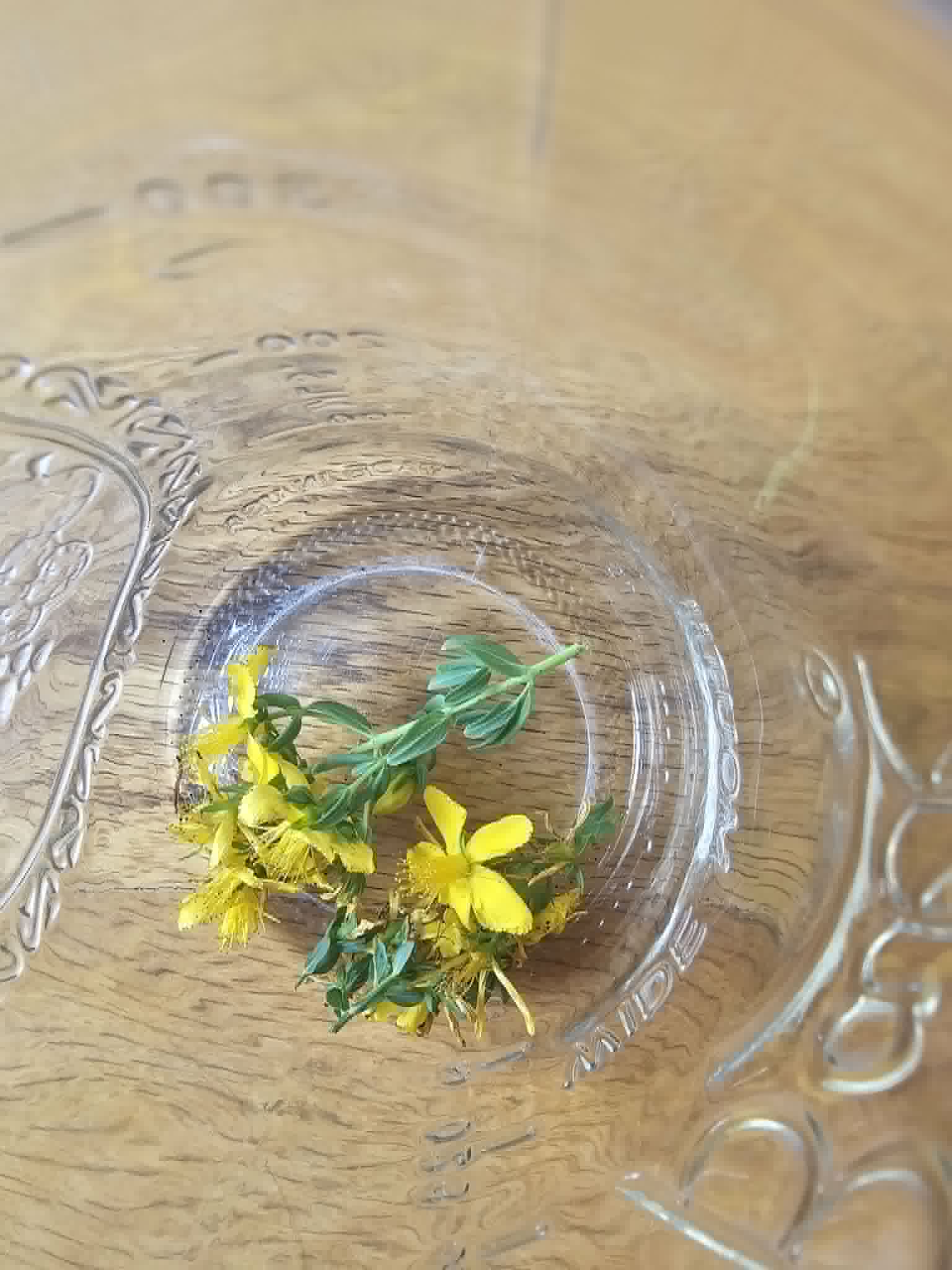
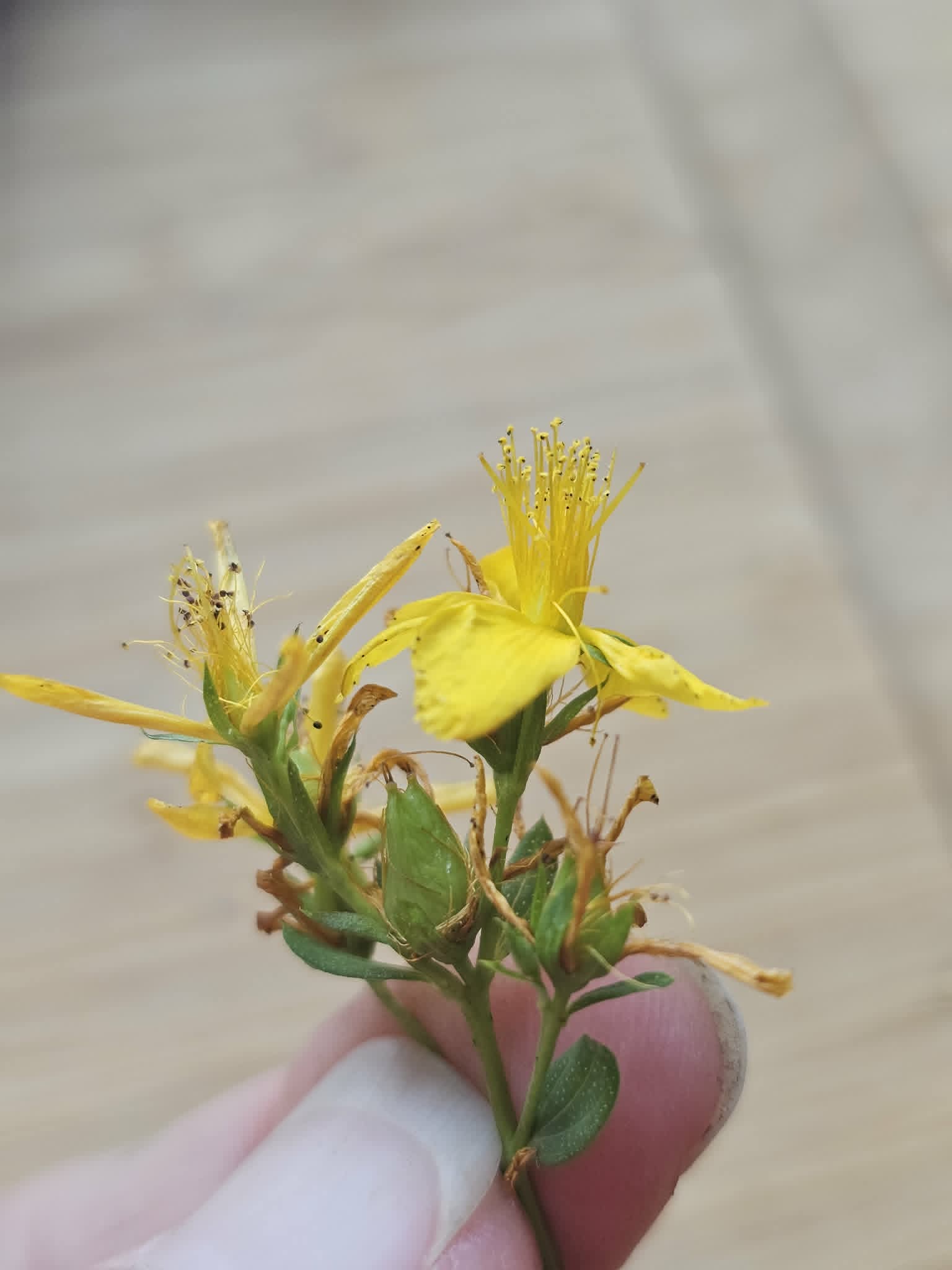
Hold a leaf up to the light and you’ll see tiny translucent dots scattered across it, like little pinpricks, that’s the “perforatum” in her name. The leaves are small, oval, and opposite each other on a smooth stem that’s often slightly two-ridged. She typically stands one to three feet tall and loves full sun.
Herbal Actions/Uses
This is a plant with a long, long history — she’s been gathered on St. John’s Day (June 24th) for centuries. She’s probably best known these days as an internal remedy for the spirits, but her topical gifts are just as old and, in my kitchen, get the most use.
- Vulnerary: the infused oil is a classic for wounds, bruises, burns, and slow-healing skin
- Nerve support: used topically for nerve pain, sciatica, shingles, and injuries where nerves are involved
- Anti-inflammatory: soothing in salves and oils for sore muscles and inflamed tissue
- Antiviral: studied and used traditionally for viral skin complaints like cold sores
- Nervine: internally, she’s traditionally used to lift and steady the spirits through dark seasons
- She’s also an anti-spasmodic, expectorant, astringent and diuretic – in tea form
From Flower to Oil to Salve
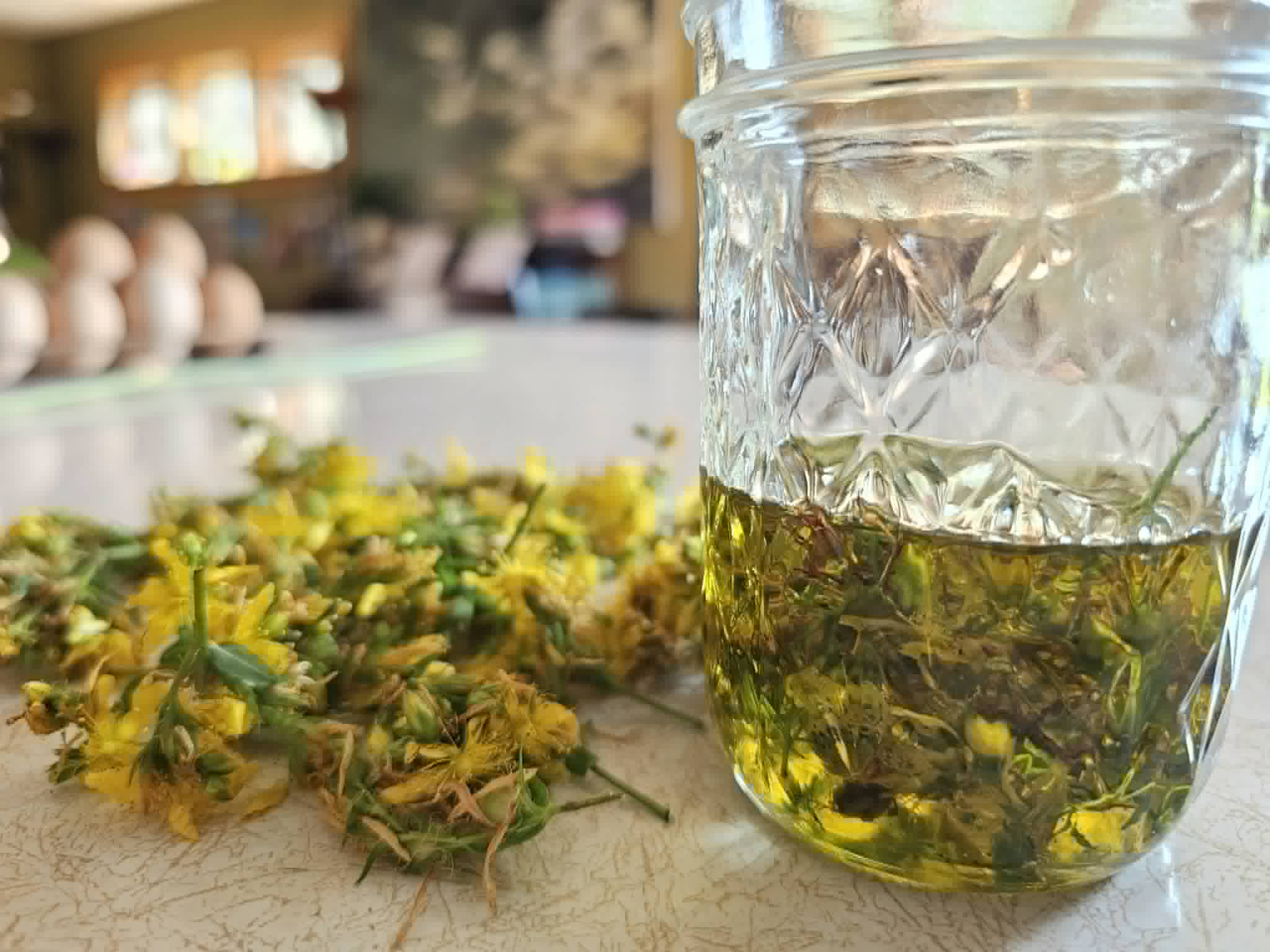
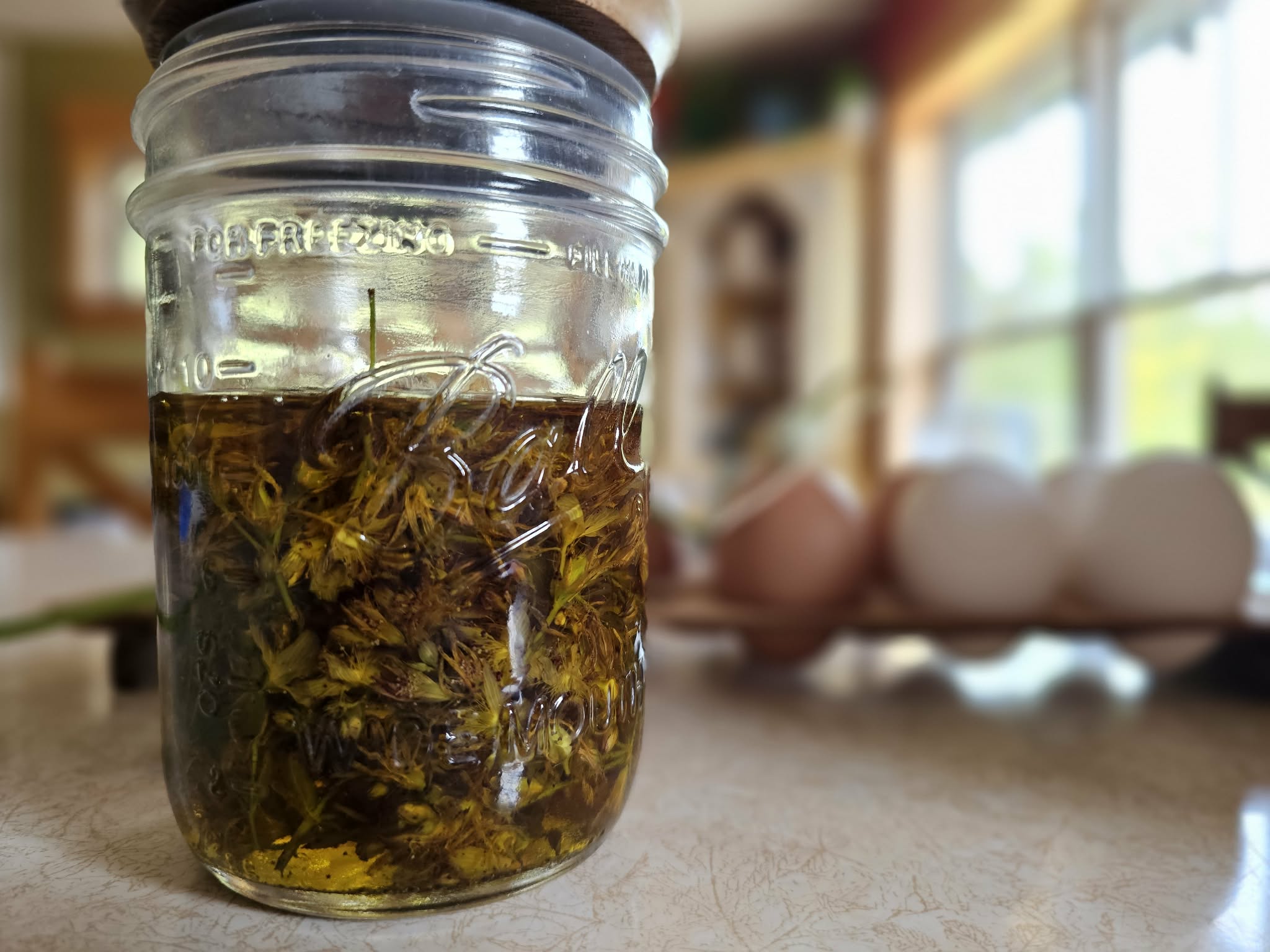
This year’s harvest is destined for one thing: salve. The freshly harvested flowering tops go straight into a jar, covered in cold pressed olive oil, and left to sit for a few weeks. Slowly the oil turns a gorgeous ruby red, pure captured sunshine, and one of the prettiest things in my apothecary.
Once the oil is strained, it gets gently warmed with beeswax and poured into tins. Come winter, the salve will be there for chapped hands, bumps, bruises, and achy spots.
To visit some of the salves that we have in our shop follow this link.
Harvesting Notes
Gather the top few inches of the flowering stems on a dry, sunny day, ideally when the buds are just opening. The buds hold the most of that red medicine. Do the pinch test as you go; the deeper the stain, the better. Fresh plant material makes the best oil, so get her into the jar the same day, after a couple of hours to dry, if you can.
Why to Keep St. John’s Wort Close
St. John’s Wort has earned her place in my garden and on my shelf. She blooms at the very peak of summer and then hands you that brightness, in a jar of red oil, in a little tin of salve, to carry into winter. Skin healing, nerve comfort, and a bit of bottled sunshine, all from a “weed” of neglected ground. Plants are so intuitive.
Thanks for swinging by. You can find more like this in the Plant Profiles header on our blog.
A Quick Note on Safety
This post is for educational purposes only. Even used topically, St. John’s Wort can cause photosensitivity (extra sensitivity to sunlight) in some people, so it’s wise to patch test and avoid applying it right before sun exposure. Taken internally, she deserves extra care: she interacts with many medications, including antidepressants, birth control, and blood thinners. Please consult your healthcare provider before using herbs medicinally, especially this one.
Meet St. John’s Wort, IRL
Slight correction in my video. I refer to the active compound in the flower as Hypericum, but the redish magic is actually called hypericin.


