
Fireweed
Fireweed ~ Epilobium angustifolium or Chamaenerion angustifolium (her taxonomic synonym), sometimes referred to as willowherb, is a perennial herbaceous flowering plant in the evening primrose family. She’s a restorative, sun-loving herb that blooms June through September. She pops up in open disturbed areas and can often be found where a fire has occurred. She also loves sunny meadows, edges of the forest, foothill montane and subalpine sites. And she’s powerful. I feel like I say that about every plant, because most plants are powerful.
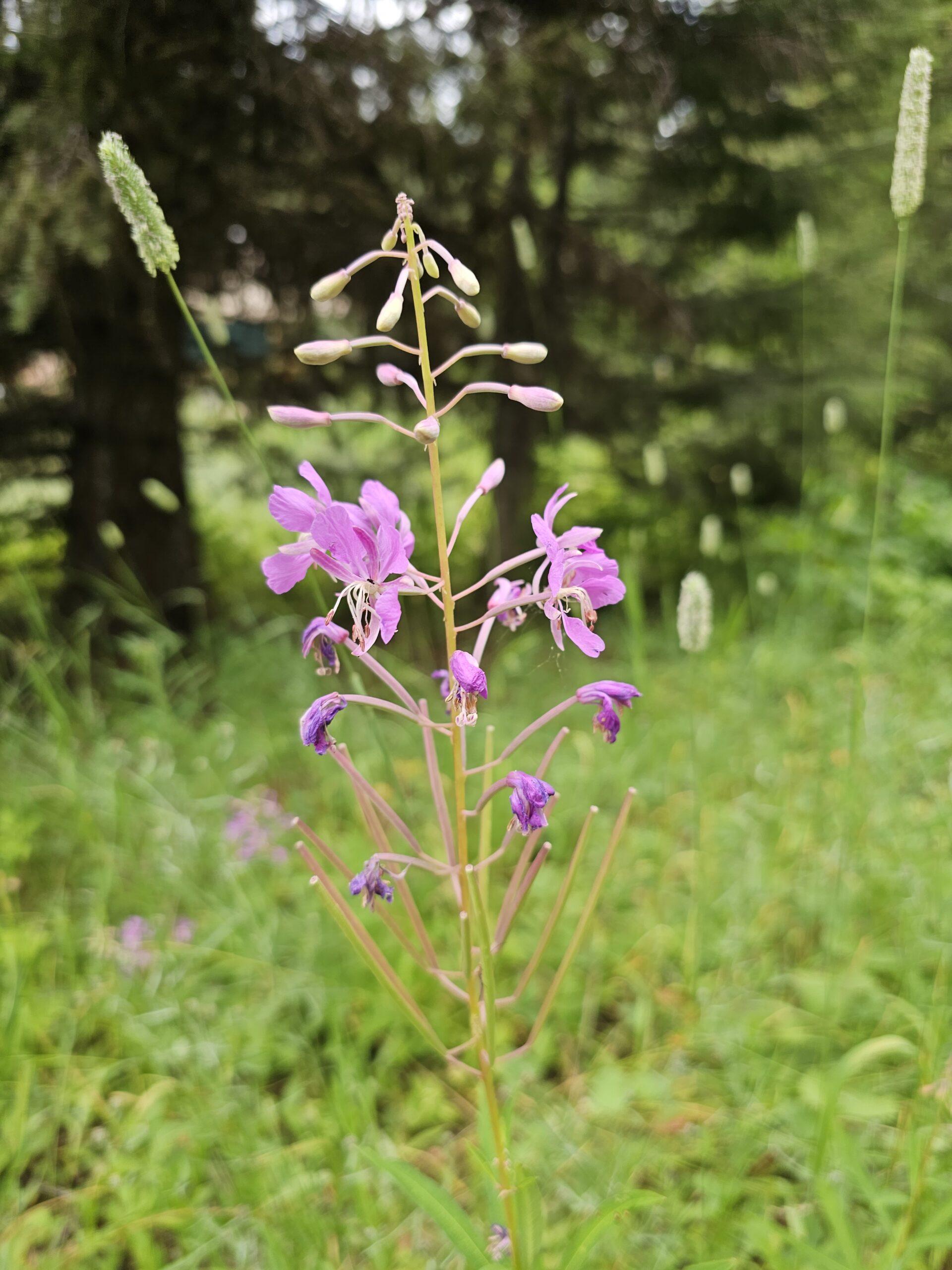
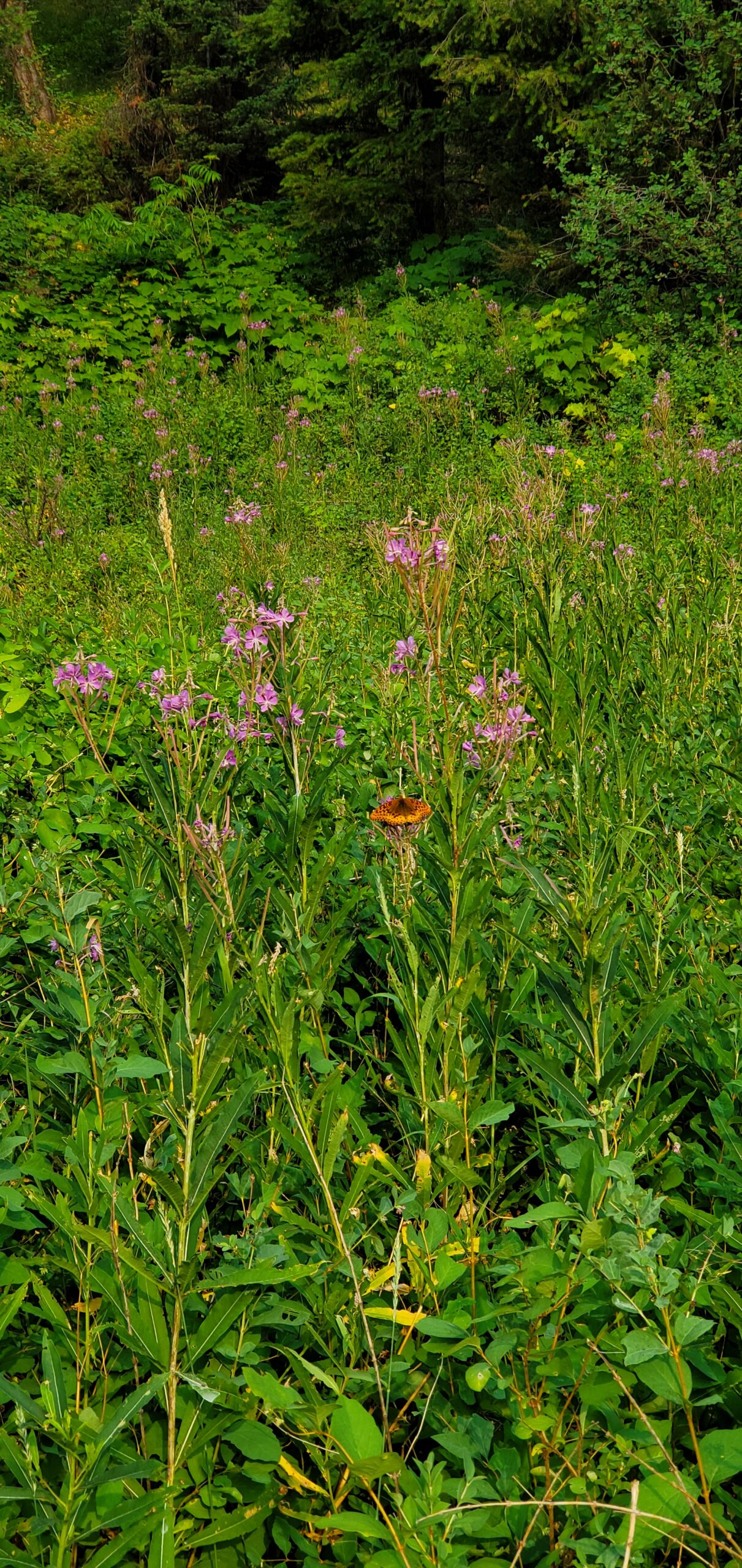
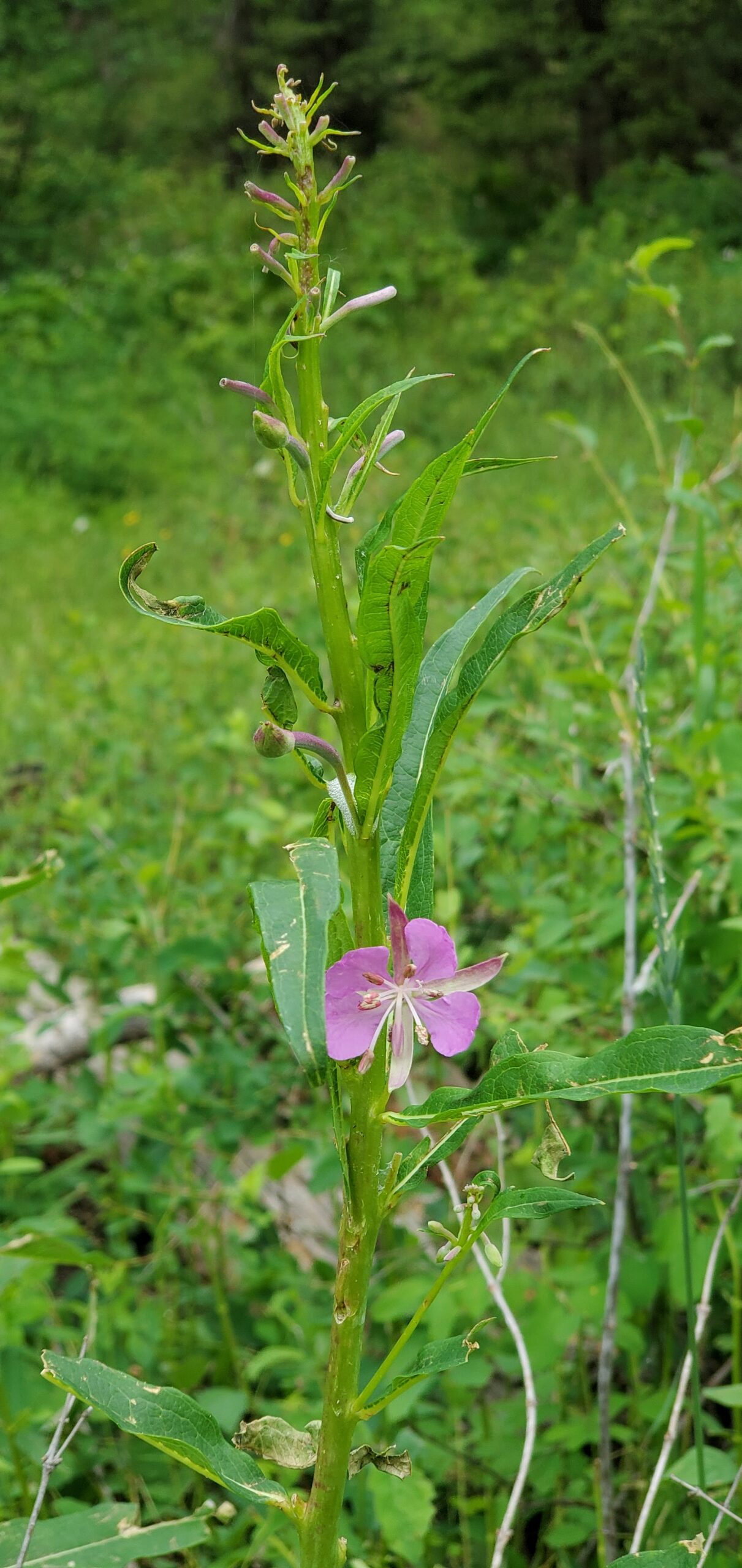
Identifying Fireweed
After round II of my Master Naturalist Certification (in Montana) – I’ll be dorking out about identifiers in a deeper way.
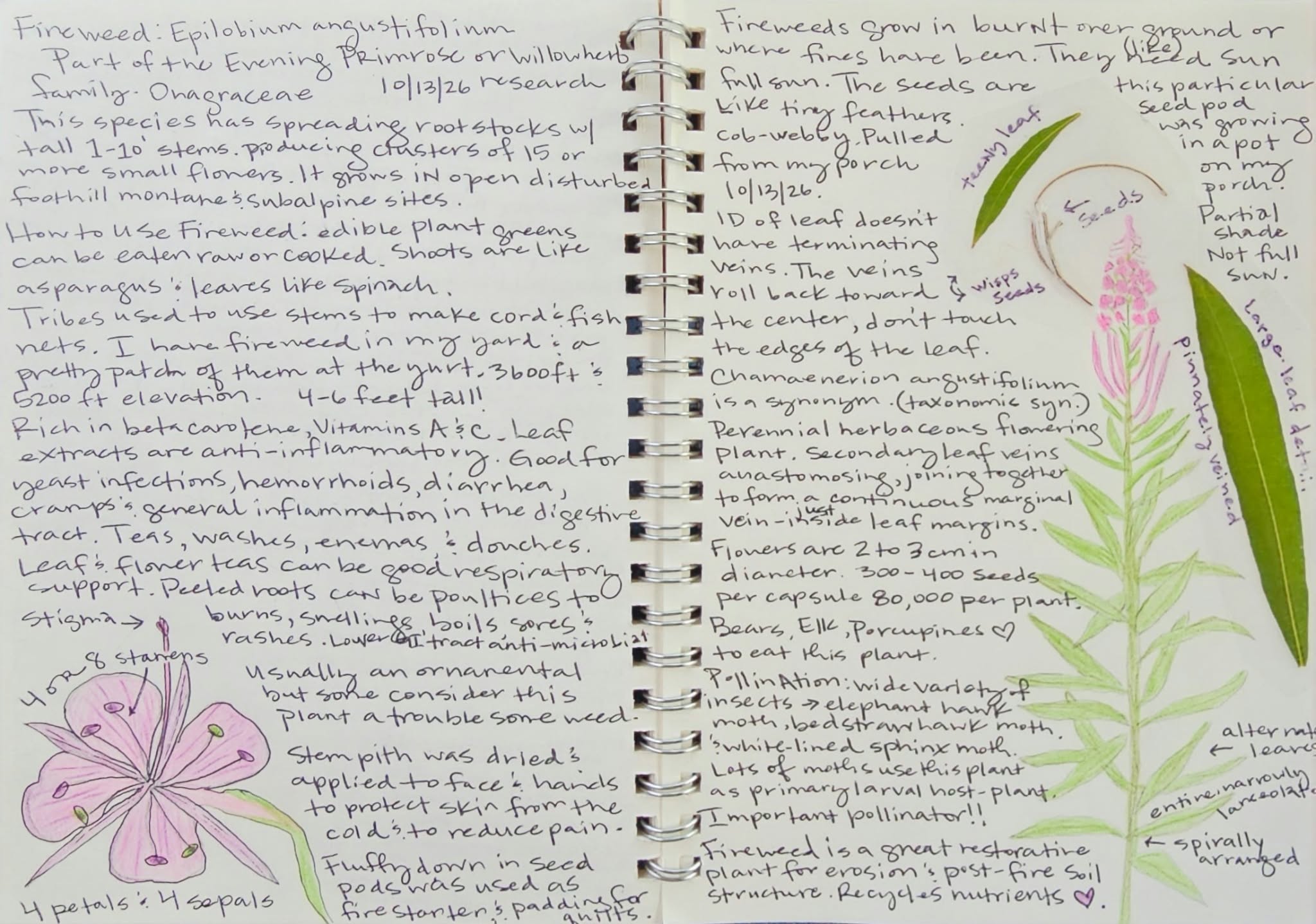
Fireweed has spreading rootstalks and is usually found in clusters of fifteen or more. We are lucky to have a nice patch of Fireweed right next to the yurt (5200 feet elevation) and one in our front yard (3200 feet elevation). Each flowering plant is anywhere from 4-6 feet in height. Leaves are green and alternate, pinnately veined, with non-terminating veins. This means the veins start at the center of the leaf and wrap back into the center, never reaching the edge of the leaf.
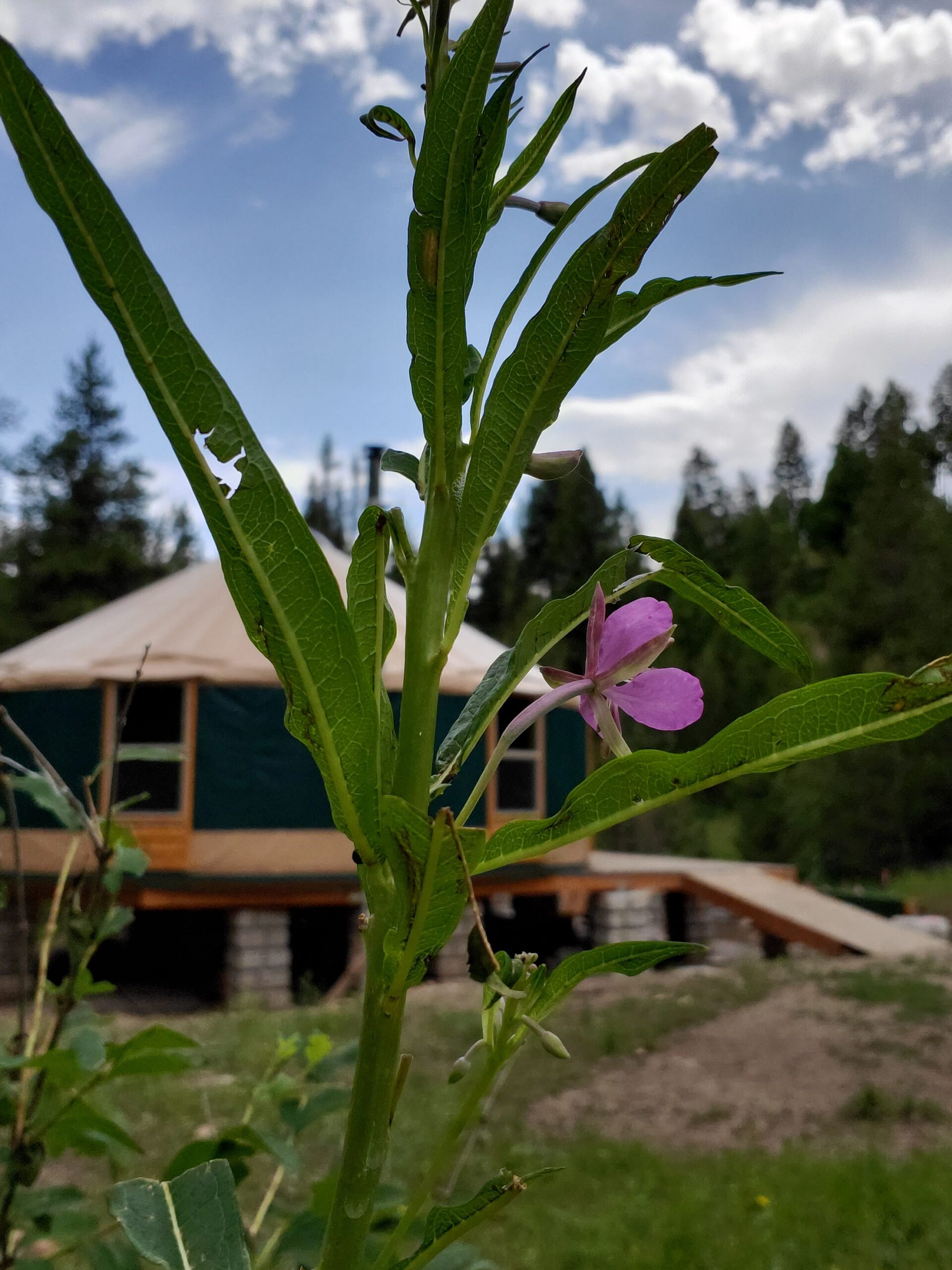
When flowering the flowers are pink or sometimes even purple-ish in hue. Flowers are approximately 2-3 cm in diameter. They have 4 petals, 4 sepals and 4-8 stamens. These plants can often be found in areas where fire has previously occurred, but this isn’t always the case.
Herbal Actions/Uses
This is a plant with many herbal actions – I won’t name them all.
- Demulcent: sooths respiratory system
- Anti-inflammatory: soothing in infusions, washes, enemas and douches – especially beneficial as digestive support
- Astringent: can reduce excess excretions and discharge – boils
- Emollient: soothing to the skin (externally) – hemorrhoids and swelling
From Plant to Body
Infusions from Fireweed’s leaves and flowers can be beneficial anti-inflammatories in the digestive tract. She’s also good for yeast infections, hemorrhoids, cramps, diarrhea, etc. Leaf and flower teas can also be good respiratory support.
Shoots from the Fireweed plant are edible and similar to asparagus. Her leaves taste a bit like spinach.
Native People used the stem pith – dried on their faces and hands to protect skin from cold and to reduce pain. And, the fluffy seed pods were sometimes used as fire starter or even padding for quilts.
Harvesting Notes
As with every plant ethical harvesting is always encouraged and recommended. Peeled roots can be used as poultices for burns, swelling, boils, rashes, etc. And her flowers and leaves may not taste very delish, but they are powerful anti-inflammatories and rich in beta carotene, and vitamins A&C.
The seed might be my favorite part of this plant. There can be up to 80,000 seeds per plant. Isn’t that bonkers? And, 300-400 seeds per capsule. The capsules are small, so this is pretty mind-blowing. I harvested and spread the seeds around different parts of our yard and meadow at the yurt this fall. I hope they multiply.
Why to Keep Fireweed Close
This plant is a very important native pollinator resource and food source for wildlife. Bears, elk, porcupines, and hares love to eat fireweed. And, many moths and butterflies rely on this plant.
I mentioned earlier this plant is also really important as a restorative for post-fire soil. She recycles nutrients AND is a great aid in preventing erosion.
Meet Fireweed, IRL
As always, I love a disclaimer. I’m not a doctor, please use caution when using herbs. And, consult a physician or your provider should questions arise.
One last quick magic trick – a fireweed seed pod being gently coaxed opened.


Leave a Reply
You must be logged in to post a comment.